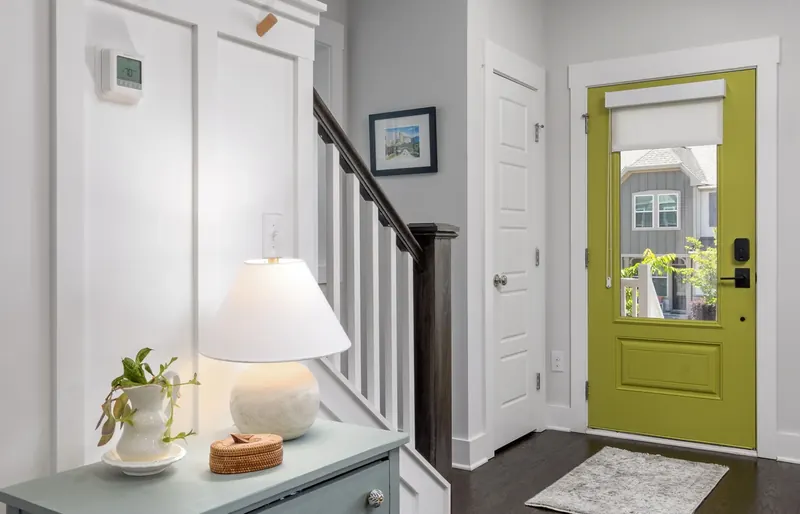
A handrail supports movement along a route, while a grab rail usually supports a specific movement or transfer. Rail shape, continuity, position and fixing all need to suit the route and the user.
Assess the full route
Look at the approach to the first step, changes in direction and where the rail finishes. A short section in the middle may leave the difficult part unsupported. Discuss how the person currently moves and whether support is needed on more than one side.
Preserve usable walking and access space
A rail projects into the space beside it. Check the remaining corridor or stair width and whether doors can still open. Wheelchairs, walkers and other household members need to be considered alongside the person using the rail.
Choose materials for the location
An outdoor route has different exposure from an indoor hallway. Ask about finish, corrosion resistance, heat, grip when wet and ongoing maintenance. Match the specification to the actual location rather than choosing only by colour.
Check structure and applicable requirements
Mountings, posts and their supporting structure need assessment. Stair and ramp details may also need design or certification input. The installer should confirm the requirements for the particular work rather than applying a generic domestic detail everywhere.
What to include in your enquiry
Tell us the property address, the activity or room that is difficult, your timeframe and whether a professional recommendation is available. There is no need to send medical records through the form.
Project suitability, the actual contracting provider, applicable credentials and any required approvals must be confirmed before building work is agreed.
Understand the enquiry and assessment process