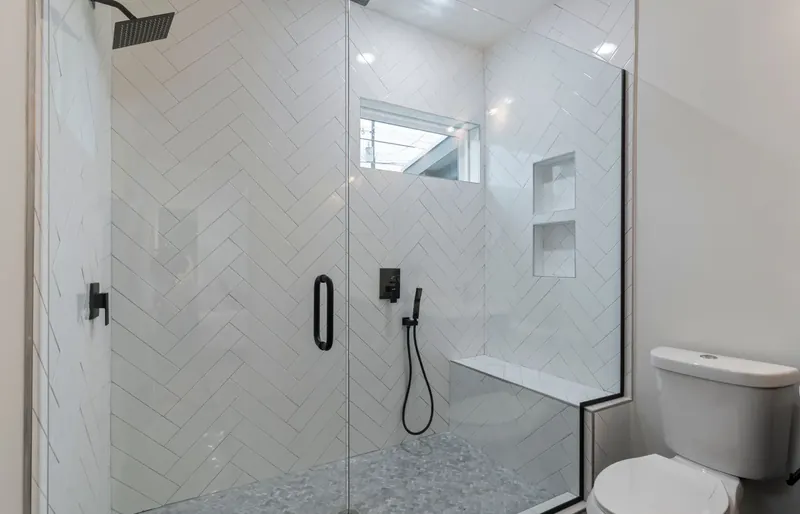
No floor should be treated as impossible to slip on. Compare slip resistance for the intended location alongside drainage, cleaning, wear and the way mobility equipment moves over the surface.
Match the finish to the location
An internal dry room, bathroom and exposed entrance have different conditions. Ask for the product performance information relevant to the proposed use. A textured appearance alone does not establish suitability.
Consider movement as well as grip
A surface that feels grippy underfoot may interact differently with wheeled equipment. Changes between surfaces also matter. Discuss the person, footwear and equipment with the relevant assessor before finalising the product.
Resolve drainage and transitions
A new surface cannot compensate for every drainage or level problem. Look at water collection, threshold changes and the meeting between old and new finishes. Check how the completed work affects doors and adjoining rooms.
Understand maintenance and product limits
Ask how the surface should be cleaned, which products are suitable and how performance changes with wear. Treatments and coatings need assessment for the existing material. Avoid accepting an absolute promise that a floor will never be slippery.
What to include in your enquiry
Tell us the property address, the activity or room that is difficult, your timeframe and whether a professional recommendation is available. There is no need to send medical records through the form.
Project suitability, the actual contracting provider, applicable credentials and any required approvals must be confirmed before building work is agreed.
Understand the enquiry and assessment process