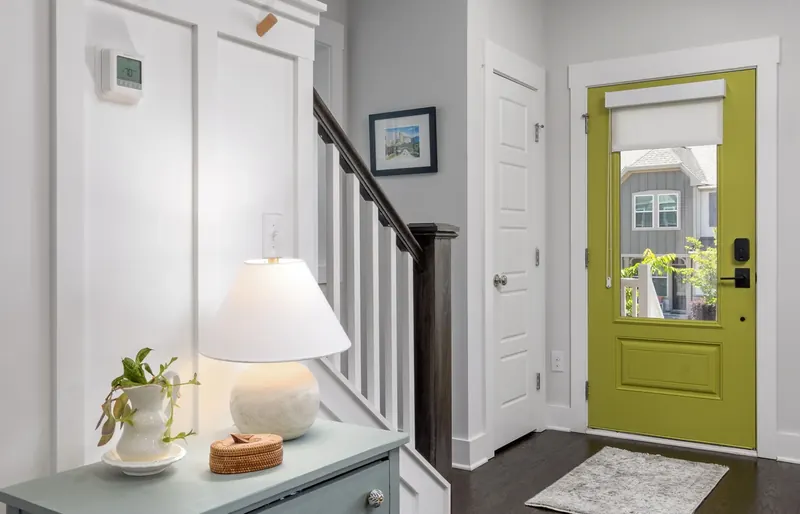
Useful lighting considers shadows, glare, contrast and controls, as well as brightness. The aim is a home that can be navigated and used comfortably in the situations that matter to the household.
Look at the home at different times
A bright room by day can be hard to use at night, and sunlight may create glare on polished finishes. Discuss the specific locations and times when seeing becomes difficult. Photographs can help describe the issue but do not replace assessment.
Connect lighting to daily routes
Consider the entrance, steps, hallway, bedroom and bathroom together. Think about reaching a switch before entering a dark space and how a visitor or carer operates the controls. Sensor settings should suit the user rather than create unexpected darkness.
Review contrast and reflections
Door hardware, switches and changes in level may be easier to locate when their surroundings are considered. Highly reflective surfaces can create a different difficulty. Individual vision needs should be discussed with a suitable professional.
Coordinate electrical work with renovation
Confirm who will complete the electrical work and what is included. During a larger renovation, plan control positions before walls are closed. Keep maintenance and lamp replacement practical for the household.
What to include in your enquiry
Tell us the property address, the activity or room that is difficult, your timeframe and whether a professional recommendation is available. There is no need to send medical records through the form.
Project suitability, the actual contracting provider, applicable credentials and any required approvals must be confirmed before building work is agreed.
Understand the enquiry and assessment process