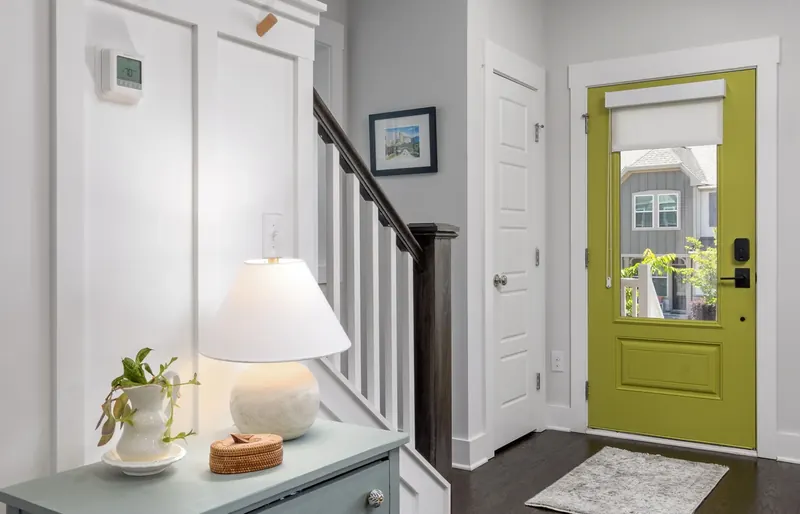
A seated stairlift is different from a lift that carries a wheelchair. Suitability depends on transfers, stair layout, safe use and whether the household can still use the stairs around it.
Start with transfers and daily use
The person needs a workable way to get on and off at each end. Discuss seating, posture, controls and any mobility equipment needed on both floors with the appropriate professional. A seat that travels on the stairs does not remove every access barrier.
Measure the staircase and landings
Straight and curved stairs can require different systems. The supplier should assess the stair width, turns, landings and the position where the lift parks. Consider doors and circulation nearby, not just the stair run.
Ask about use by the rest of the household
Check how much space remains when the seat and rail are in their normal positions. Other household members and visitors still need a usable route. Clarify the implications for any required escape route with the relevant building professional.
Understand service and support
Request maintenance, warranty and breakdown arrangements in writing. Ask about product lead times and installation access. Avoid assuming a secondhand or standard product will fit a different staircase.
What to include in your enquiry
Tell us the property address, the activity or room that is difficult, your timeframe and whether a professional recommendation is available. There is no need to send medical records through the form.
Project suitability, the actual contracting provider, applicable credentials and any required approvals must be confirmed before building work is agreed.
Understand the enquiry and assessment process